A customer sends a message asking for details. The business replies after 15–20 minutes — sometimes after an hour, sometimes the next day. By then, the customer has already contacted other options.
Most businesses assume they lost the customer because of price or competition. In many cases, the conversation simply never started properly.
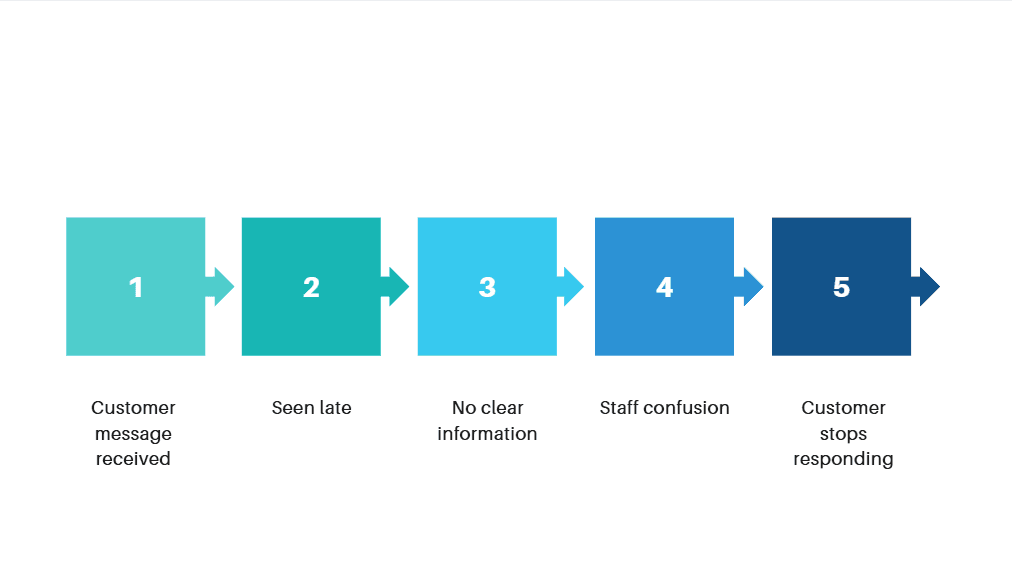
When replies depend on availability instead of a process, customers often continue their search elsewhere.
The Problem: Nobody Owns the Conversation
Messages today do not arrive at convenient times. They come during ongoing work, after closing hours, while staff is busy with another customer, or when the responsible person is unavailable.
Because there is no defined handling process, responses depend on whoever notices the message first. Some customers receive quick replies, some are forgotten, and some receive incomplete information.
The business remains active, but the conversation has no clear owner.
What This Causes Over Time
The impact builds gradually and often goes unnoticed. Interested customers stop responding. Staff repeat the same answers daily. Follow-ups depend on memory. Records remain scattered across chats. Returning customers must explain themselves again.
The business works harder, but conversations remain unstructured.
What Organized Businesses Do Differently
Organized businesses do not simply hire more staff. They introduce a handling process that guides every interaction.
- Immediate acknowledgement
- Basic detail collection
- Context shared with staff
- Smooth continuation
- Planned follow-ups
- Accessible history
The interaction continues instead of restarting every time.
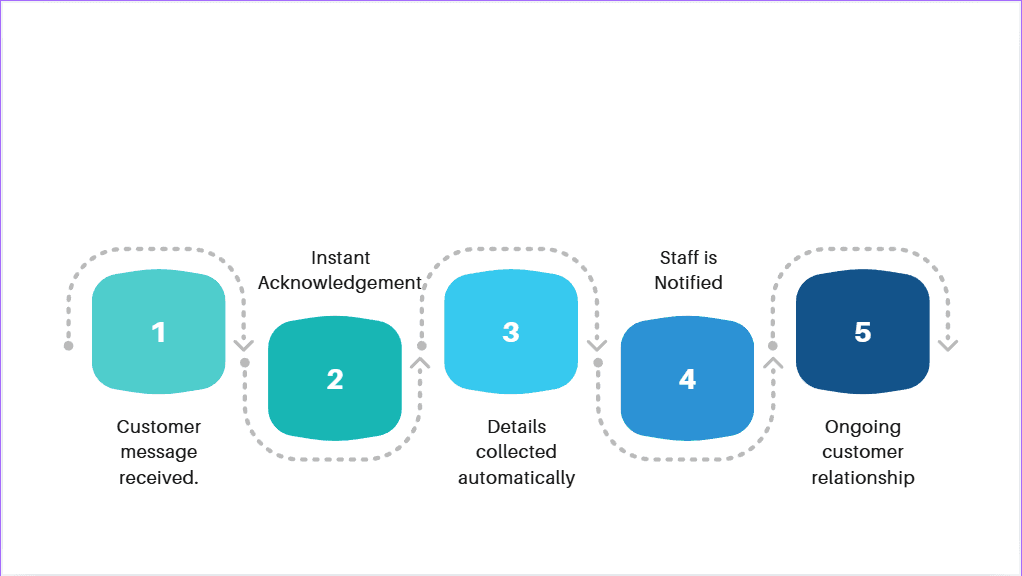
Example of a structured communication workflow followed by organized businesses.
Where Structured Communication Helps
Most customer communication happens through messaging platforms, website forms, and social channels. Instead of manually managing everything, businesses implement response systems.
- Instant acknowledgements
- Organized information
- Staff assistance
- Conversation history
This does not replace people. It removes gaps between interactions.
Practical Outcomes
Businesses with structured communication experience faster responses, fewer missed conversations, smoother follow-ups, less repetition, and better experiences for returning customers.
Customers feel attended to. Staff work with clarity.
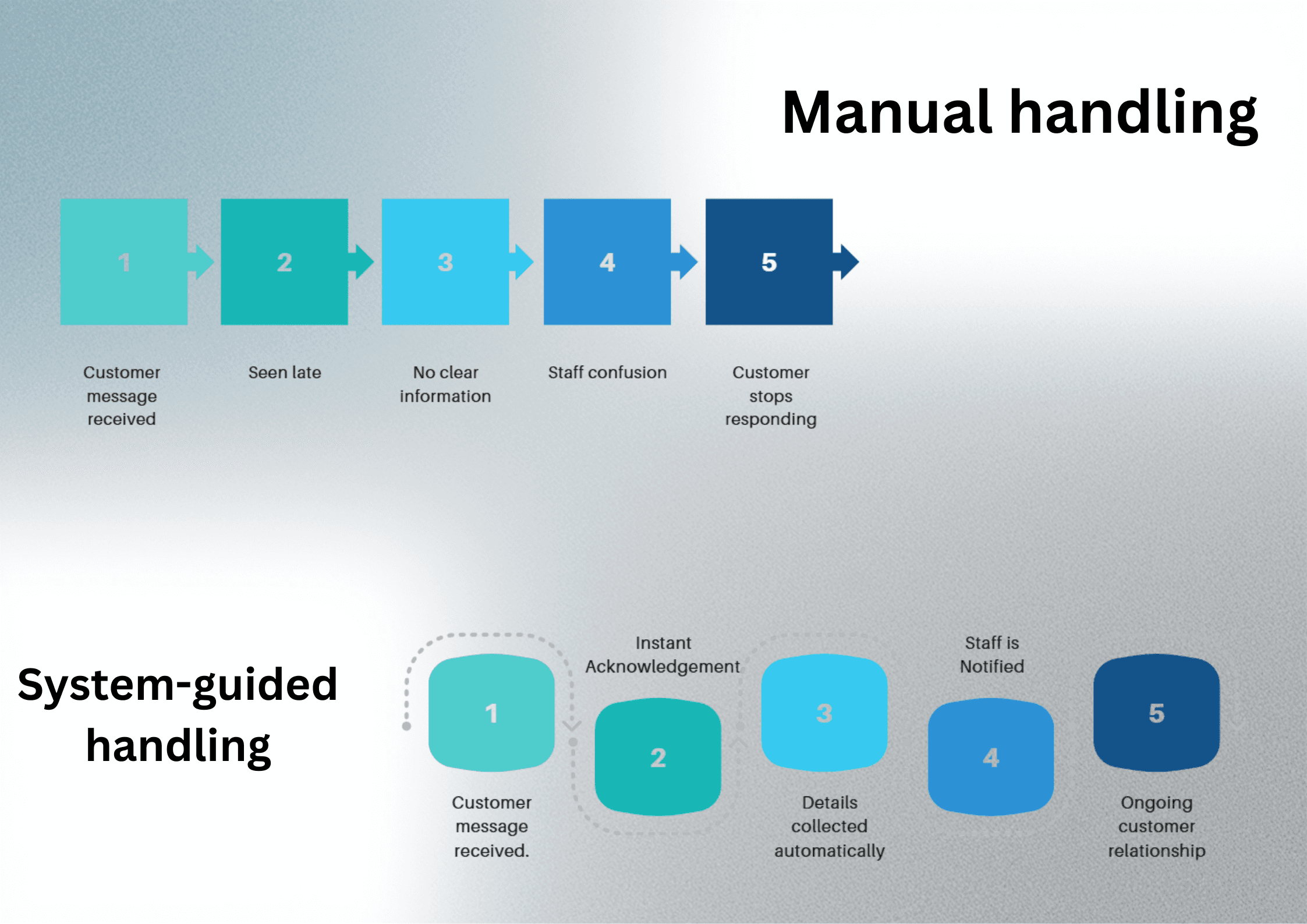
Comparison between manual handling and system-guided handling.
About Our Approach
Sigmoid AI builds structured communication systems that organize conversations from first contact to future interactions without relying on memory.
When This May Not Be Necessary
If a business receives only a few enquiries and each requires long consultation, automation may not add much value.
Quick Self-Check
- Replies depend on availability
- Follow-ups are forgotten
- Customers repeat details
- Staff answers same questions daily
- Chats are scattered